Most personal loan borrowers only discover their actual rights after something has already gone wrong, usually during a stressful recovery call or a fee they never agreed to. RBI has built a genuinely substantial framework of borrower protections covering disclosure, cancellation, recovery conduct, and complaint resolution, but almost none of it gets explained to you at the point you actually sign a loan agreement.
Here is what you are actually entitled to as a personal loan borrower in India, including the protections that specifically kick in if repayment ever becomes difficult.
The Three Overlapping Layers of Protection
RBI’s borrower protections for personal loans come from three distinct frameworks that work together. The Digital Lending Guidelines apply specifically to loans taken through an app or online platform, covering everything from a large bank’s own digital channel to a smaller fintech lender. The Fair Practices Code applies more broadly to how banks and NBFCs conduct lending and recovery, regardless of whether the loan originated online or at a branch. The RBI Integrated Ombudsman Scheme sits outside any individual lender entirely, functioning as a free, independent grievance mechanism you can approach if a lender’s own resolution process fails you.
Your Right to Full Disclosure Before You Sign
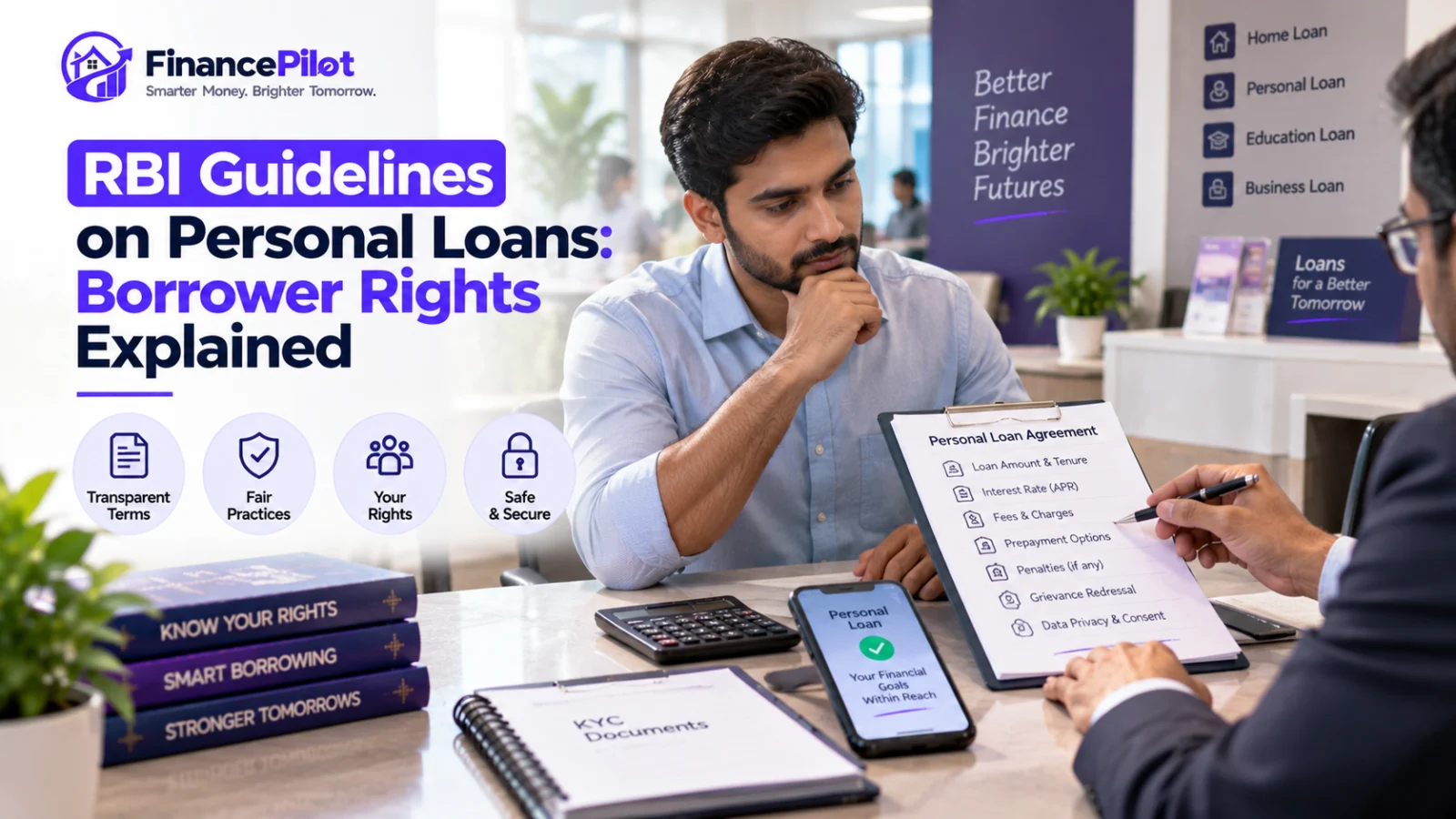
Every lender is required to provide a Key Fact Statement, a mandatory one-page document laying out the annual percentage rate, every applicable fee, your total repayment amount, and the loan tenure, before you commit to the agreement. This document must now be presented in a font size and format that is genuinely readable on a mobile screen, specifically to prevent lenders from burying key terms in fine print. A meaningful protection follows directly from this requirement, if a charge does not appear in your Key Fact Statement, it generally cannot be legally recovered from you later, regardless of what a longer loan agreement elsewhere might claim.
Your Right to a Cooling-Off Period
Digital lending guidelines give you a short window, typically three to five days depending on the loan, during which you can exit the loan agreement entirely without penalty. You are required to receive an SMS or email explicitly stating when this cooling-off period expires. During this window, you can return only the principal amount along with interest calculated for those specific days, and charges like prepayment penalties are strictly prohibited from being applied during this exit. This exists specifically to address impulse borrowing triggered by aggressive digital marketing, giving you a genuine, penalty-free reconsideration window rather than locking you into a multi-year commitment the moment you tap accept.
Your Right to Switch, Prepay or Restructure
You are entitled to switch from a floating to a fixed interest rate structure, or adjust your EMI amount or tenure, subject to your lender’s specific terms. Our guide to loan prepayment rules in India covers exactly which loans now qualify for prepayment without any foreclosure charge under RBI’s 2025 Directions, effective from January 2026, a right that has made switching lenders or closing a loan early considerably more accessible for eligible borrowers.
Loan Default Is a Civil Matter, Not a Crime
This is worth stating plainly since it is widely misunderstood. Falling behind on a personal loan EMI is a civil matter in India, not a criminal offence, and a genuine borrower cannot be arrested simply for missing a payment. Recovery agents and lenders sometimes imply otherwise during collection calls, and this specific misrepresentation is itself a violation of RBI’s Fair Practices Code.
Your Rights During Loan Recovery
If your account does move into recovery, RBI’s rules place specific, enforceable limits on how a lender and its agents can behave.
Contact Time Restrictions
Recovery agents may only contact you between 8 AM and 7 PM. Repeated calls within the same day, or contact outside these hours without your specific consent, falls outside permitted conduct.
No Contact With Family, Employer or Neighbours Without Consent
Your loan details are your private financial information. Recovery agents are not permitted to discuss your outstanding debt with family members, colleagues, your employer, or neighbours without your explicit consent, and doing so specifically to pressure or embarrass you into paying is a direct violation of these rules.
No Threats, Workplace Visits, or Public Shaming
Agents cannot use abusive language, threats, or intimidation, cannot visit your workplace to cause embarrassment, and cannot publicly shame you in any form as a collection tactic. The lender remains fully responsible for its agents’ conduct, even when recovery has been outsourced to a third-party agency, and must inform you in writing when your case is handed to an external agent.
The 90-Day Window Before NPA Classification
If you anticipate difficulty making a payment, the period before your account is classified as a Non-Performing Asset, typically around 90 days of overdue payment, is genuinely your most valuable window for negotiation. Requesting restructuring in writing the moment you foresee trouble demonstrates good faith and often prevents the situation from escalating into more aggressive recovery action entirely. Waiting until you are already deep into default removes much of this negotiating leverage.
Why Your Personal Loan Cannot Trigger Asset Seizure Without a Court Order
A meaningful distinction exists between secured and unsecured debt here. SARFAESI, the law that allows lenders to seize and sell secured collateral like property after a mandatory notice period, applies only to secured loans. Personal loans and credit card dues are unsecured, meaning a lender cannot seize your assets without going through the courts first, unlike the accelerated process available for a defaulted secured loan like a home loan. Our guide to why personal loan applications get rejected is a useful companion read if you are trying to avoid ending up in a recovery situation in the first place, since understanding what lenders actually assess helps you borrow within a range you can genuinely repay.
What’s Changing: RBI’s Fourth Amendment Directions, 2026
RBI has moved recovery conduct from general principle-based guidance toward a detailed, legally enforceable code under the Fourth Amendment Directions, 2026, backed by binding statutory authority under the Banking Regulation Act. These directions specifically address a newer form of harassment, app-based lenders remotely locking or disabling a borrower’s financed device, and introduce a quantified compensation mechanism for exactly this kind of violation. Banks and NBFCs have until January 1, 2027 to fully redesign their recovery policies, contracts, and agent oversight systems to comply.
How to File a Complaint
Start with your lender’s own grievance officer, submitting your complaint in writing with specific dates and details of what occurred. If the issue is not resolved within 30 days, or if you are dissatisfied with the outcome, you can escalate for free to the RBI Integrated Ombudsman Scheme through the official portal, which can award compensation for proven harassment. Our guide to safe, regulated digital loan apps covers how to verify a lender’s regulatory standing in the first place, which matters here too, since these borrower protections apply specifically to RBI-regulated entities and may not extend cleanly to an unregistered operator. For genuine threats or harassment, filing a police complaint alongside your RBI escalation is also advisable.
Frequently Asked Questions
Can I be arrested for missing a personal loan EMI?
No. Loan default is a civil matter in India, not a criminal offence, and a genuine borrower cannot be arrested simply for falling behind on payments. Any implication otherwise from a lender or recovery agent is itself a violation of RBI’s Fair Practices Code.
What is the cooling-off period for a personal loan?
Digital lending guidelines provide a cooling-off window, typically three to five days, during which you can exit the loan agreement without penalty by returning only the principal and interest for those days. Prepayment penalties cannot be applied during this specific window.
When can recovery agents contact me?
Recovery agents are permitted to contact you only between 8 AM and 7 PM, and they cannot discuss your loan details with your family, employer, or neighbours without your explicit consent, nor can they visit your workplace to cause embarrassment.
Can a lender seize my assets if I default on a personal loan?
No, not without a court order. Personal loans are unsecured, so the accelerated asset seizure process under SARFAESI, which applies to secured loans like a home loan, does not apply here. A lender must go through the courts to pursue recovery through asset seizure on an unsecured personal loan.
What should I do if a recovery agent harasses me or my family?
Document the incident with dates and details, then file a written complaint with your lender’s grievance officer. If unresolved within 30 days, escalate for free to the RBI Integrated Ombudsman Scheme, which can award compensation for proven harassment, and file a police complaint separately for any genuine threats.