Digital lending in India has genuinely become safer over the past two years, not because fraud has disappeared, but because RBI has built real, checkable infrastructure that lets any borrower verify a lender in a few minutes before sharing a single document. Most people simply do not know this infrastructure exists. Instead of only learning what a scam looks like, it helps just as much to know exactly what a legitimate, regulated lending app looks like and how to confirm one is genuine.
Here is how regulated digital lending actually works in India, the official tools available to verify a specific app, and what a genuinely safe lending process looks like in practice.
What Makes a Lender “Regulated” in India
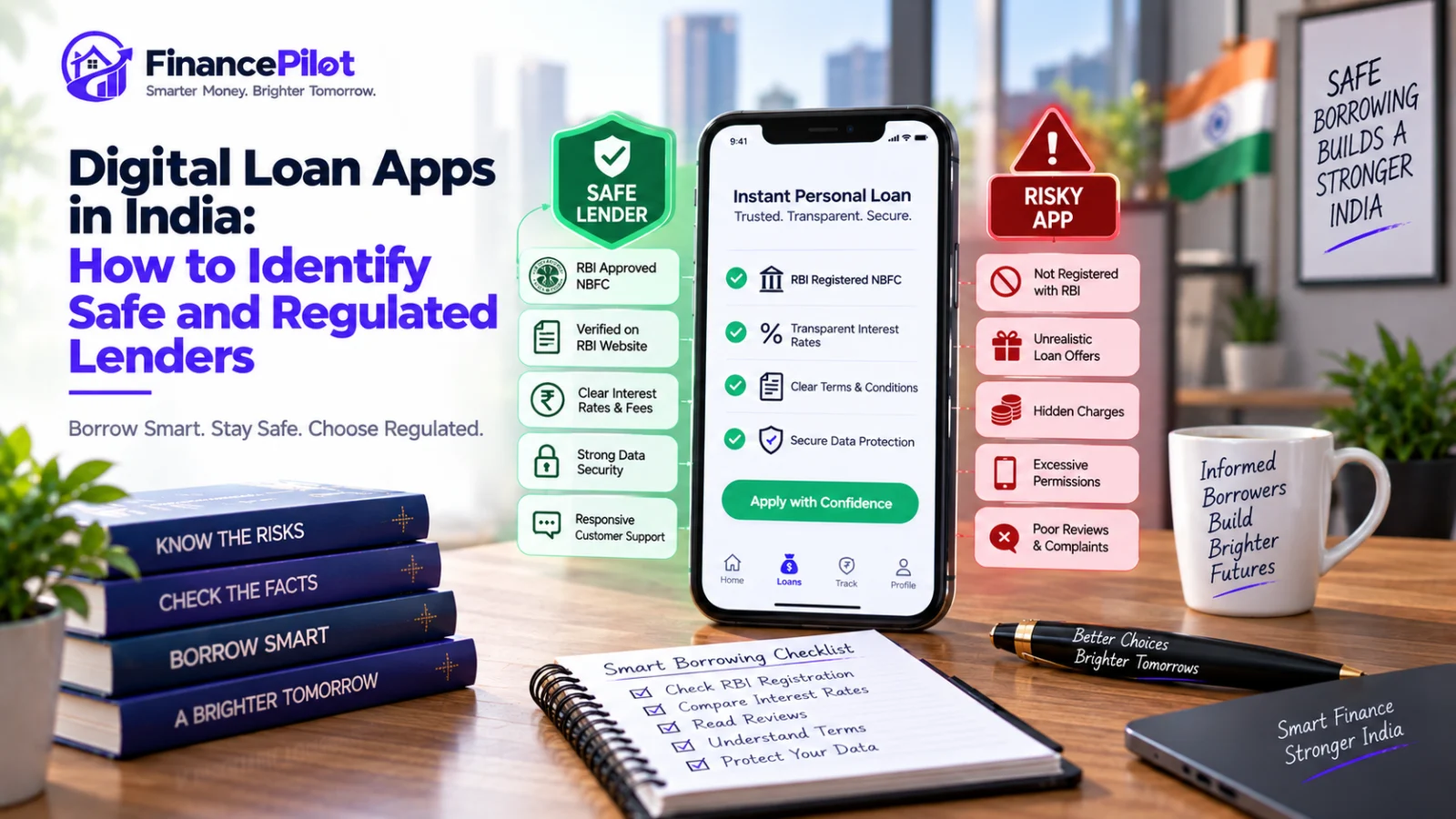
Under RBI’s Master Direction on Digital Lending, updated in April 2026, a Digital Lending App, or DLA, must be operated either directly by a Regulated Entity, such as a bank, Small Finance Bank, or NBFC, or by a Lending Service Provider acting as an authorised agent on behalf of one of these regulated entities. This is described as the “licence anchor” requirement, every legitimate app must be anchored to a specific, named regulated entity, and if it cannot point to one, it does not qualify as a legal digital lender regardless of how professional it looks.
The Categories of Regulated Entities
Scheduled Commercial Banks and Small Finance Banks sit at one end, generally the most heavily supervised category. NBFCs, Non-Banking Financial Companies, make up the majority of app-based digital lenders operating today, each holding a Certificate of Registration from RBI that can be independently verified. Housing Finance Companies operate under a similar registered framework for property-linked lending. Lending Service Providers are not lenders themselves, they are authorised agents or platforms that originate and service loans on behalf of one of the categories above, meaning the actual money and legal liability sit with the regulated entity they represent, not the app’s own brand name.
RBI’s Official Digital Lending Apps Directory
This is the single most useful, and most underused, tool available to borrowers. RBI operationalised a public Digital Lending Apps Directory on its website effective July 1, 2025, specifically in response to fraudulent apps falsely claiming relationships with real banks and NBFCs. Every regulated entity is legally required to report each digital lending app it deploys onto this directory through RBI’s Centralised Information Management System. As of September 2026, the directory lists over 1,000 distinct apps, each tied to a specific, named bank, NBFC or HFC.
What the Directory Actually Confirms, and Its One Important Caveat
Finding an app listed in this directory tells you that a specific regulated entity has formally reported deploying it, which is a genuinely strong signal of legitimacy. It is worth being precise about what this directory is not, though. RBI itself notes that entries are reported by the regulated entities themselves and are not independently validated by RBI beyond that reporting requirement. In practice, this means the directory is an official reporting mechanism, not a certification stamp on each individual app’s practices, and it should be treated as your starting verification step rather than the only one you need.
The 5-Step Verification Flow Before You Apply
Start by finding the specific named lender, the bank, NBFC or HFC, that the app discloses as its regulated partner, usually in its “About Us” section or Play Store listing. Second, check that exact entity against RBI’s Digital Lending Apps Directory to confirm this specific app is listed under that lender’s name. Third, cross-check the lender’s Certificate of Registration status on RBI’s list of regulated entities, confirming it is currently active rather than cancelled or expired. Fourth, search the app and lender name on the RBI Sachet Portal, which flags entities under investigation or already identified as problematic. Fifth, before accepting any loan offer, read the Key Fact Statement in full and review exactly what permissions the app is requesting. If any single step in this sequence comes back blank or unverifiable, that gap alone is sufficient reason to stop before sharing any personal data.
What a Genuinely Safe App Looks Like in Practice
A properly regulated lending app discloses its specific NBFC or bank partner clearly and consistently, not buried in fine print. It provides a Key Fact Statement before you commit, stating the full annual percentage rate and every applicable charge in one place, a requirement that has been mandatory since April 2024. It requests only the permissions genuinely needed for KYC verification, typically camera access for a selfie and document upload, nothing broader, unlike the excessive access patterns covered in our guide to loan app scam warning signs. Loan disbursal happens directly into your own bank account, with no third-party intermediary handling the transfer at any point, a specific requirement under current digital lending rules. Our comparison of personal loans and credit card loans covers how this Key Fact Statement disclosure lets you genuinely compare offers on a like-for-like basis, something that was far harder before this requirement existed.
A Word of Caution on “Verified” Badges You May See Advertised
You may come across references to an upcoming body called DIGITA, the Digital India Trust Agency, expected to formally vet and stamp lending apps as verified. As of 2026, this body remains proposed rather than operational, so any app or website currently displaying a “DIGITA verified” badge is referencing a certification system that does not yet functionally exist. Rely only on the live, working RBI DLA Directory and the NBFC registration check described above until any such new verification system is actually operational and confirmed by RBI directly.
Google Play’s New Compliance Requirement
From January 28, 2026, personal loan apps distributed through the Google Play Store in India are required to be listed in RBI’s official DLA Directory to remain available on the platform. This adds a meaningful additional filter, though it is worth noting that enforcement of this requirement has been described as still completing across the platform, meaning an app’s mere presence on the Play Store, even now, is not yet complete proof of compliance on its own. Running the full five-step verification above remains worthwhile even for an app you found through an official app store.
Why “RBI Approved” Is Still the Wrong Phrase to Search For
It bears repeating clearly, since this specific misconception causes real harm. RBI does not approve individual lending apps, and no legitimate app should ever claim this exact phrase about itself. What genuinely exists is RBI’s registration of banks, NBFCs and HFCs as regulated entities, and its official directory confirming which specific apps those entities have deployed. Our guide to loan app scam warning signs covers the specific red flags this confusion enables if you want the opposite side of this same verification process. Understanding this distinction is precisely what lets you tell a lender that is accurately describing its regulatory status from one that is borrowing RBI’s credibility it has not actually earned.
Frequently Asked Questions
What is RBI’s Digital Lending Apps Directory?
It is an official public repository, operational since July 1, 2025, where every RBI-regulated bank, NBFC and HFC is required to report each digital lending app it deploys. As of September 2026, it lists over 1,000 apps, each tied to a specific, named regulated entity, and it is the primary tool borrowers should use to verify a lending app’s legitimacy.
Does being listed in the RBI DLA Directory mean an app is officially approved?
Not exactly. RBI itself notes that entries in the directory are reported by the regulated entities themselves and are not independently validated by RBI beyond that reporting requirement. It confirms a formal, disclosed relationship with a regulated lender, which is a strong signal, but it is not equivalent to an official approval stamp on the app’s specific practices.
What is a Lending Service Provider?
A Lending Service Provider is an authorised agent or platform that originates and services loans on behalf of a regulated bank, NBFC or HFC, without being a lender itself. The actual money and legal responsibility for the loan sit with the regulated entity the LSP represents, not with the app’s own brand.
Is the “DIGITA verified” badge a real certification?
Not yet. DIGITA, the Digital India Trust Agency, remains a proposed body as of 2026 and is not currently operational. Any app displaying a “DIGITA verified” badge is referencing a system that does not yet functionally exist, and borrowers should rely on the live RBI DLA Directory instead.
Are all personal loan apps on the Google Play Store automatically safe?
No. While personal loan apps are required to be listed in RBI’s DLA Directory to remain on Google Play from January 28, 2026 onward, enforcement of this requirement is still being completed across the platform. It remains worthwhile to independently verify any app through the five-step process, regardless of where you downloaded it from.